Search This Blog

Showing posts with label British India coins. Show all posts

Wednesday, August 10, 2011

1947, (King George VI)


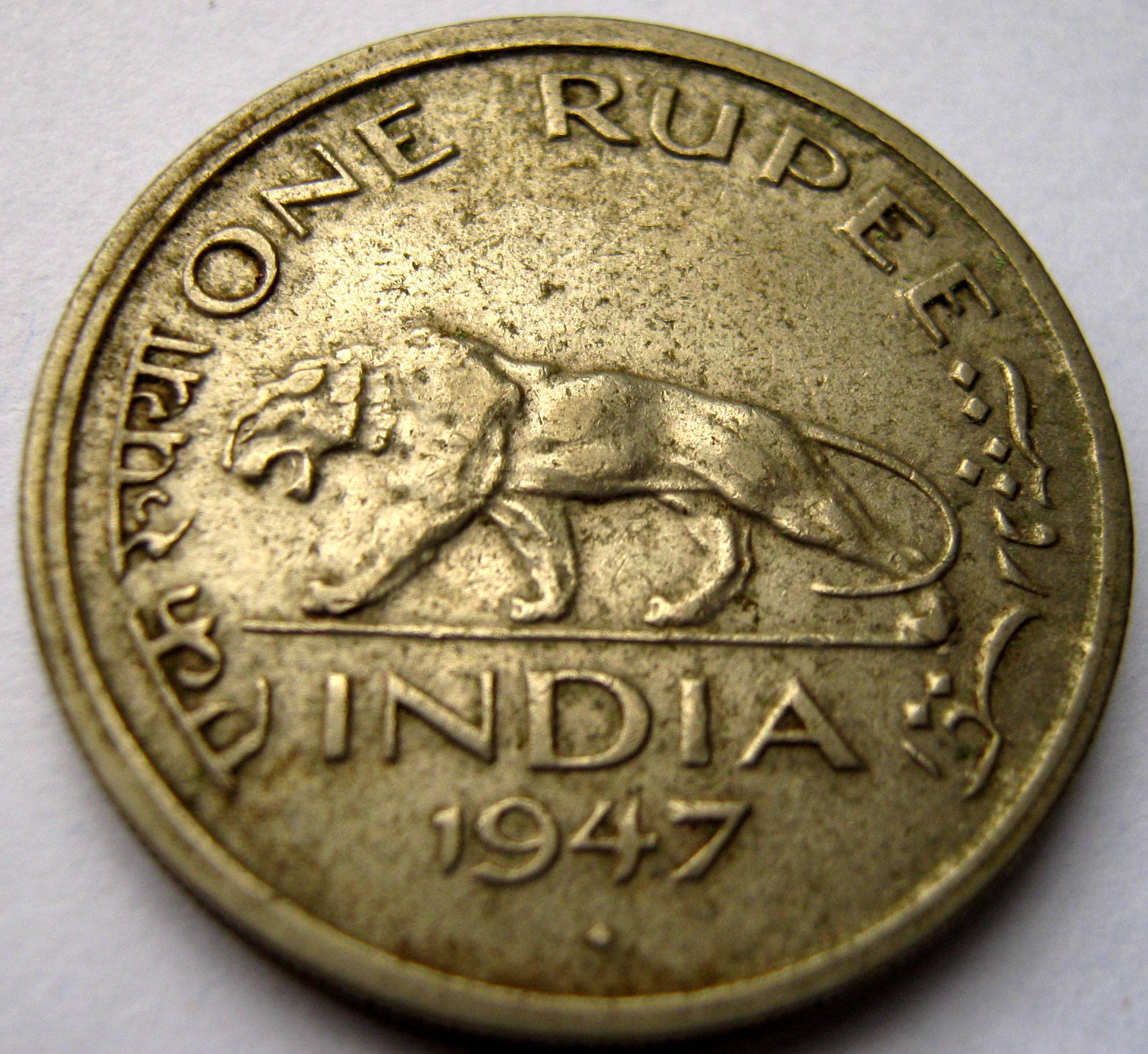
Year of issue – 1947
 
Specifications
Weight- 180 grains
Metal composition- 165 grains of pure silver and 15 grains of alloy
Diameter –
1.1”
Shape - Circular
Edge – milled
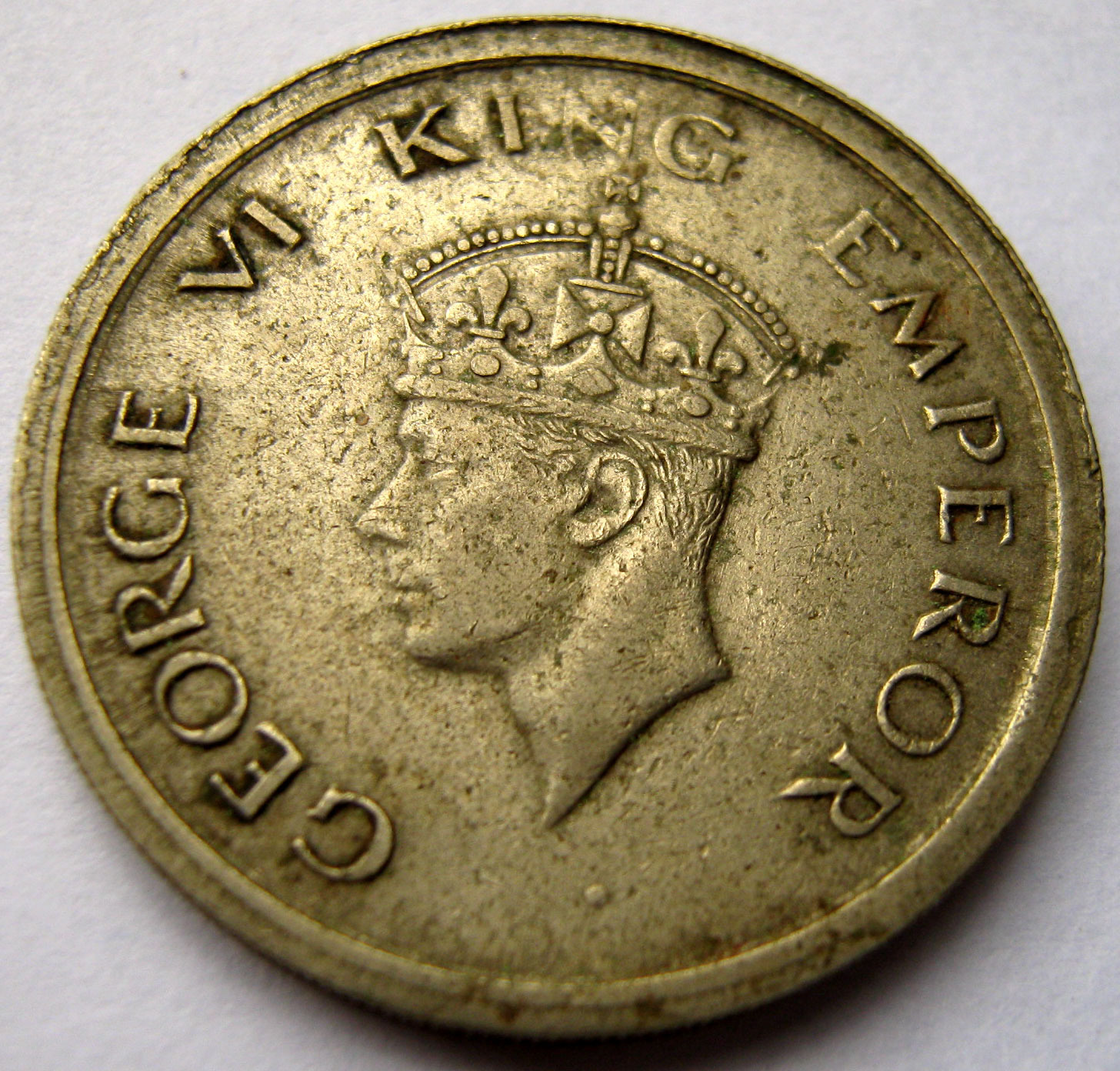
Obv - effigy of the then king or queen of United Kingdom
Rev – Value in English, Hindi and Persian with a stalking tiger.
Metal composition – Pure Nickel

1940 - 1945, (King George VI)


Metal composition - quaternary alloy ( 50% silver,40% copper, 5% Nickel and 5% Zinc)
Edge – Security
Years of issue – 1940 to 1945

Pure Nickel Rupee:
Due to the rise of price of silver after the end of World war II, the Government decided to issue rupee and other Quaternary Silver coins, in pure Nickel.
 
Specifications
Weight- 180 grains
Metal composition- 165 grains of pure silver and 15 grains of alloy
Diameter – 1.3”
Shape - Circular
Edge – milled
Obv - effigy of the then king or queen of United Kingdom
Rev – Value of the coin

1937 - 1939, (King George VI)


Obv – Crowned head of King George VI with the legend “GEORGE VI KING EMPEROR”
Years of Issue – 1938, 1939

Quaternary Silver Rupee:
The 2nd World War started in 1939. Due to the war the price of silver rose high. The metal value of the silver rupee coin surpassed its face value. Hence the Government decided to issue rupee and other Standard Silver coins in quaternary alloy.
 
Specifications
Weight- 180 grains
Metal composition- 165 grains of pure silver and 15 grains of alloy
Diameter – 1.3”
Shape - Circular
Edge – milled
Obv - effigy of the then king or queen of United Kingdom
Rev – Value of the coin
 

1911 - 1936, (King George V)


Obv – Crowned head of King George V with the legend “GEORGE V KING EMPEROR”
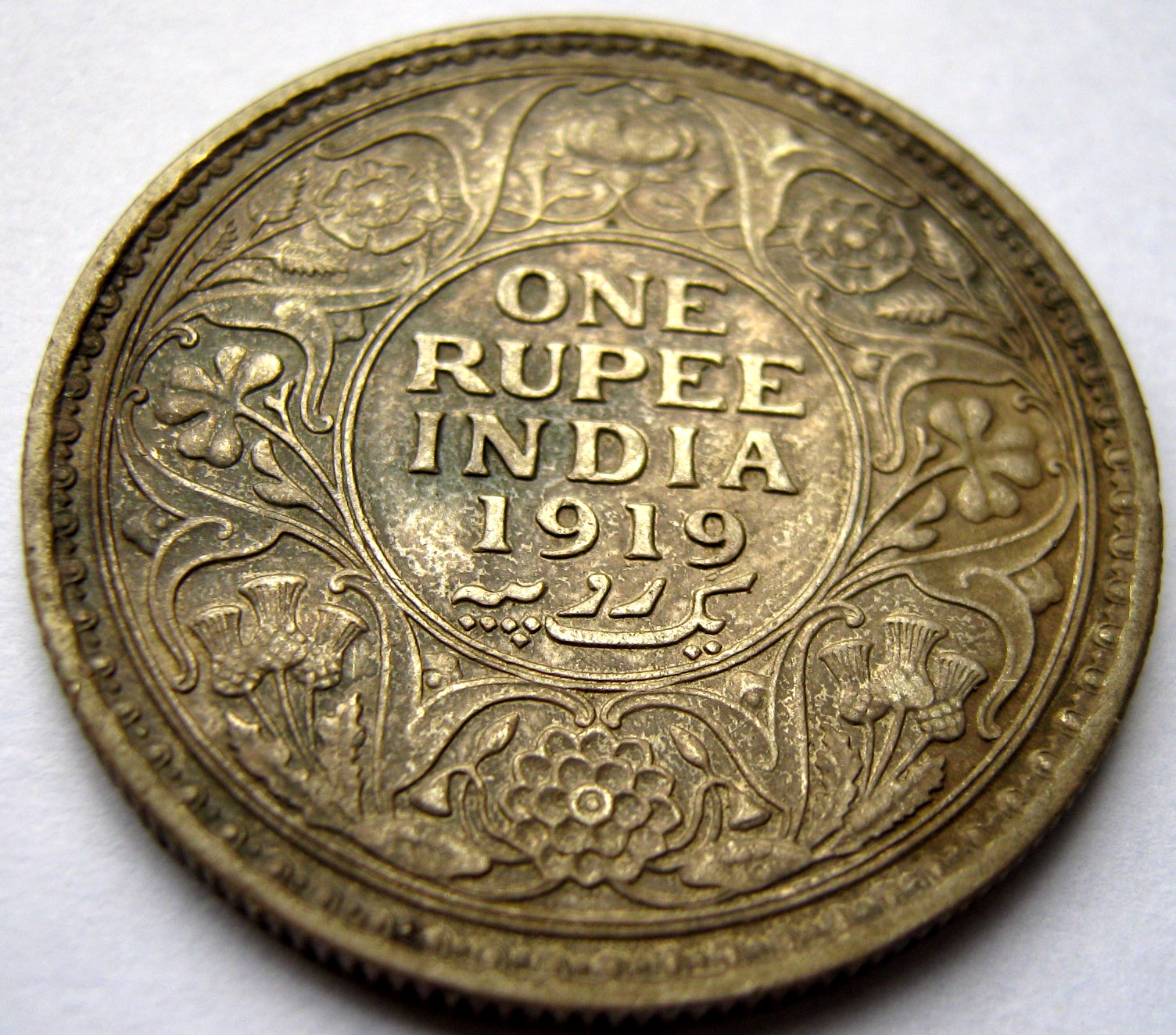
Rev – Coin value in English and Persian with date surrounded with a floral design.

King George VI was coroneted in 1937. Rupee coins were issued bearing his effigy from 1938. 

Specifications
Weight- 180 grains
Metal composition- 165 grains of pure silver and 15 grains of alloy
Diameter – 1.3”
Shape - Circular
Edge – milled
Obv - effigy of the then king or queen of United Kingdom
Rev – Value of the coin
 

1901 - 1910, (King Edward VII)


Obv – Uncrowned head of King Edward VII with the legend “EDWARD VII KING & EMPEROR”
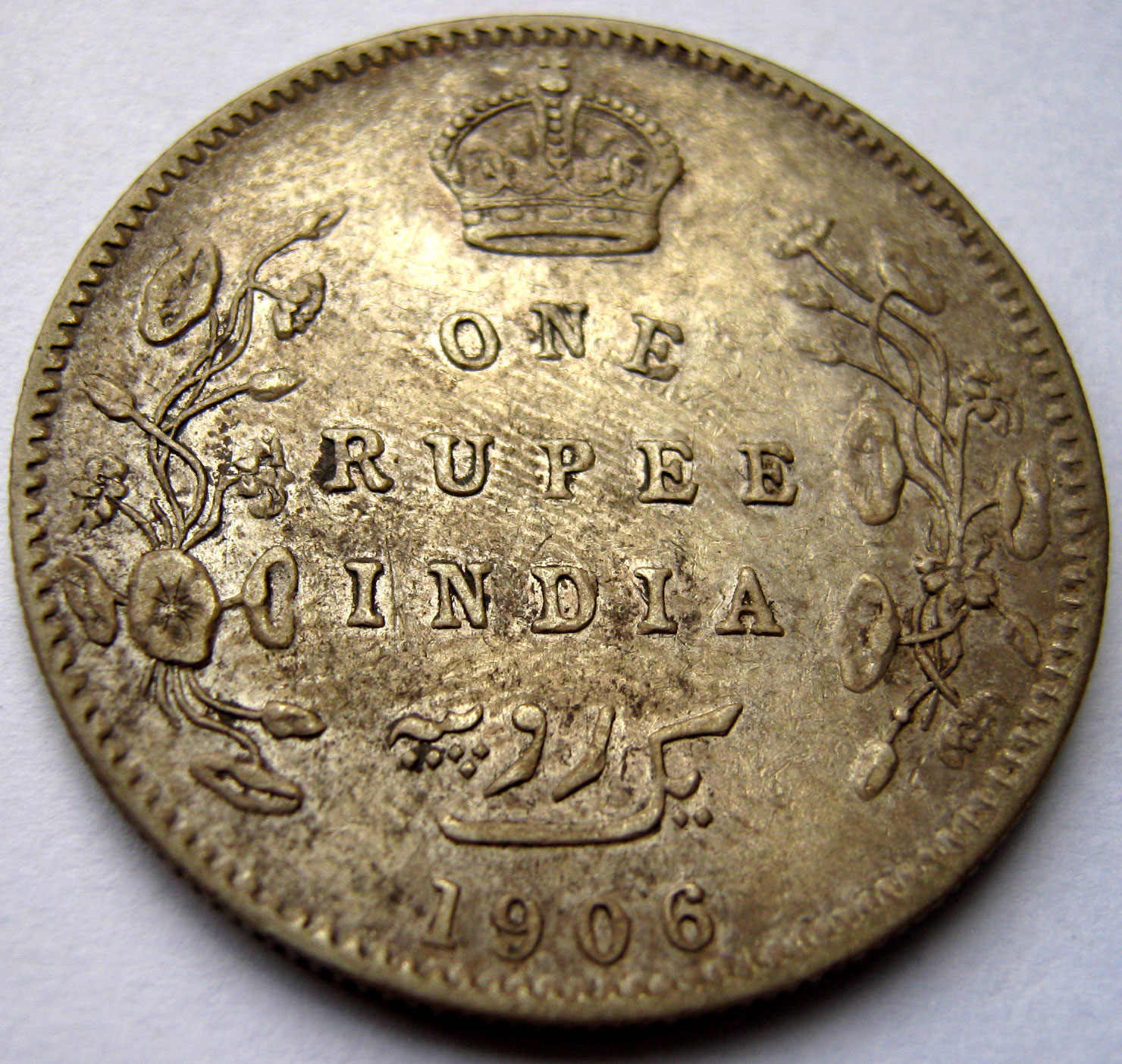
Rev – Crown of the king, coin value in English and Persian and a floral design.

King George Variable was coroneted on 22nd June, 1911 after the death of his father King Edward VII. Rupee coins were issued bearing his effigy from 1911 to 1922. No rupee coin was issued from 1923 to 1936.


Specifications
Weight- 180 grains
Metal composition- 165 grains of pure silver and 15 grains of alloy
Diameter – 1.3”
Shape - Circular
Edge – milled
Obv - effigy of the then king or queen of United Kingdom
Rev – Value of the coin

1877 - 1901, (Victoria Empress)


Obv - Crowned bust of Victoria Empress with      the legend “VICTORIA EMPRESS”
 
 Specifications
Weight- 180 grains
Metal composition- 165 grains of pure silver and 15 grains of alloy
Diameter – 1.3”
Shape - Circular
Edge – milled
Obv - effigy of the then king or queen of United Kingdom
Rev – Value of the coin

1862 - 1876, (Queen Victoria, Crowned head)


Obv - Crowned bust of Queen Victoria in place of uncrowned head design of the earlier issues with the divided    legend “VICTORIA QUEEN”
Rev – Value of the coin in English only. Legend “EAST INDIA COMPANY” removed
 
Specifications
Weight- 180 grains
Metal composition- 165 grains of pure silver and 15 grains of alloy
Diameter – 1.3”
Shape - Circular
Edge – milled
Obv - effigy of the then king or queen of United Kingdom
Rev – Value of the coin

On 1.1.1877 Queen Victoria assumed the title of “Empress of India”. Hence the inscription on the Rupee and other coins was changed from “Victoria Queen” to “Victoria Empress”.

1840 - 1861, (Second issue) (Queen Victoria – Divided Legend)


Obv - Uncrowned head of Queen Victoria with the divided legend “VICTORIA QUEEN”

Specifications
Weight- 180 grains
Metal composition- 165 grains of pure silver and 15 grains of alloy
Diameter –
1.3” to 1.2”
Shape - Circular
Edge – milled
Obv - effigy of the then king or queen of United Kingdom
Rev – Value of the coin

After the Indian mutiny in 1857, the administration of India was transferred from East India Company to a Council of state under British crown. In the year 1858 Victoria was proclaimed as the queen of Great Britain and colonies.

1840, (First issue) (Queen Victoria – Continuous Legend)


Obv – Uncrowned head of Queen Victoria with the continuous legend “VICTORIA QUEEN”
 
 Specifications
Weight- 180 grains
Metal composition- 165 grains of pure silver and 15 grains of alloy
Diameter – 1.3”
Shape - Circular
Edge – milled
Obv - effigy of the then king or queen of United Kingdom
Rev – Value of the coin

1835 – 1840 (King William IIII)


Obverse
Reverse

Specifications
Weight- 180 grains
Metal composition- 165 grains of pure silver and 15 grains of alloy
Diameter – 1.3”
Shape - Circular
Edge – milled
Obv - effigy of the then king or queen of United Kingdom
Rev – Value of the coin

Obv - Head of William IV with the legend “WILLIAM IIII KING”
Rev – Value of the coin in English and Persian with the legend “EAST INDIA COMPANY”

Tuesday, August 9, 2011

ONE RUPEE OF IMPERIAL BRITISH INDIA 1874


3 Pence - Georgivs VI


The threepence or thrupenny bit was a denomination of currency used by various jurisdictions in England, Ireland, Scotland and Wales, until decimalisation of the pound sterling and Irish pound  in 1971. It was also used in some parts of the British Empire (later known as the Commonwealth), notably Australia, New Zealand and South Africa.

Before decimalisation brought about a new currency with new coinage, the sum of three pence was pronounced variously "THROOP-ence" "THREPP-ence" or "THRUPP-ence" reflecting different pronunciations in the various regions of Great Britain. Likewise, the coin was usually referred to in conversation as a "THROOP-nee" "THREPP-nee" or "THRUPP-nee" bit.


During the reign of king George VI, circulation silver threepences were produced only in 1937–1945 (and almost all the 1945 examples were subsequently melted down). The obverse shows a left-facing effigy of the king with the inscription GEORGIVS VI D G BR OMN REX, while the reverse has an elegant design of a shield of St George lying on a Tudor rose, dividing the date, with the inscription FID DEF IND IMP THREE PENCE.


The nickel-brass threepence took over the bulk of the production of the denomination, being produced in all years between 1937 and 1952 except 1947. Apart from the king's head and name, and the weight being increased to 6.8 grams, the coin was identical to that prepared for Edward VIII.

Metal    : Nickel-Brass
Weight   : 6.8 grams
Diameter : 22mm
Shape    : 12 sided